5800 USD

Mera Peak

6,476
field_679730edb7269CountryNepal
field_6797312a90f60Max. Altitude6,476m
field_679732d22b14eDuration20 Days
field_679733229b355Daily Trek Time
field_67973379519cfSeasonSpring/Autumn

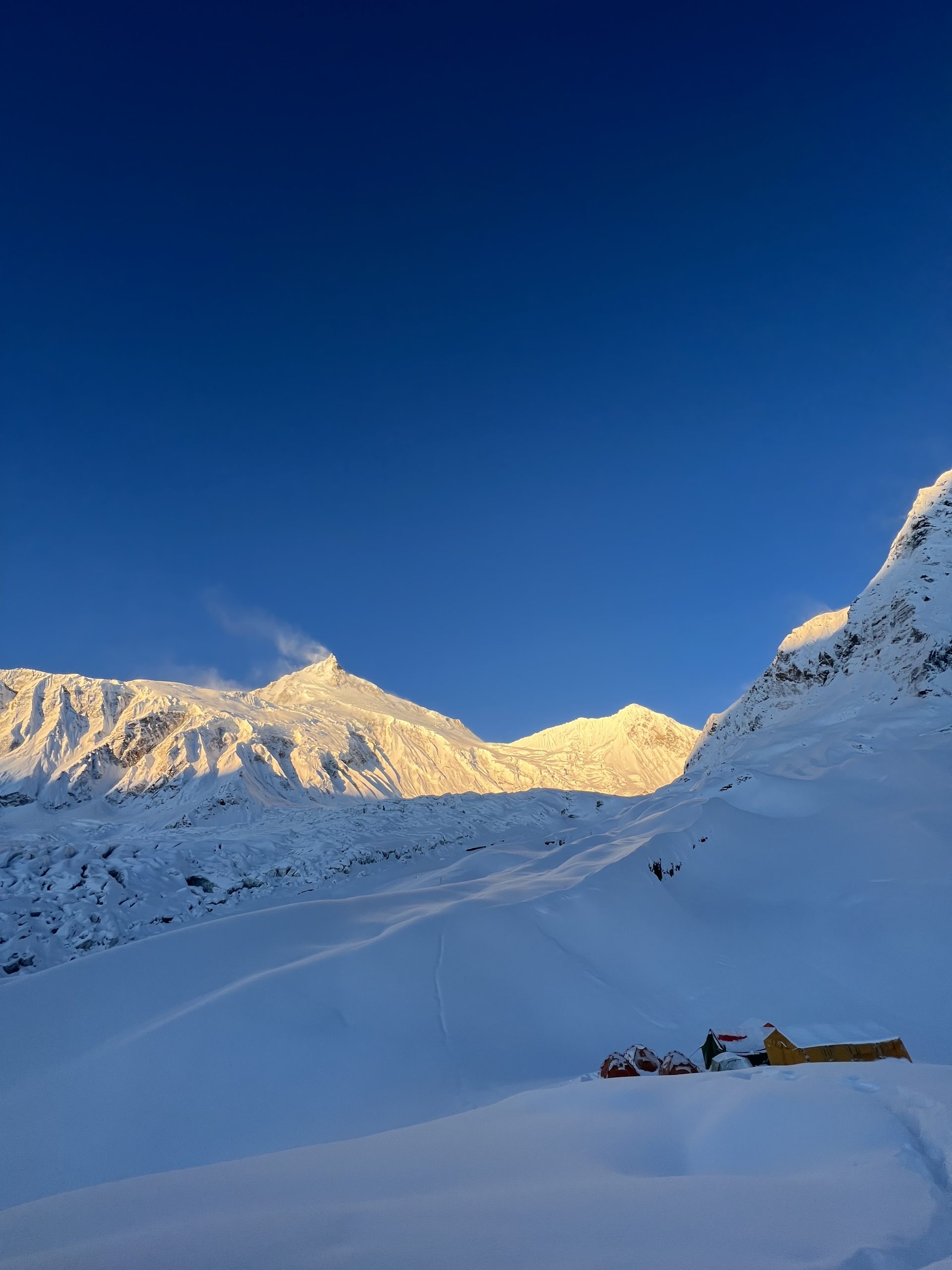
Mera Peak (6,476 m) is the crown jewel of Nepal’s trekking peaks, offering adventurers a thrilling blend of high-altitude challenge and Himalayan beauty. Nestled in the heart of the Solu-Khumbu region, this non-technical climb rewards you with awe-inspiring, panoramic views of Everest, Lhotse, Makalu, Cho Oyu, and Kanchenjunga. The journey takes you through pristine valleys, remote Sherpa villages, and breathtaking alpine landscapes, culminating in an unforgettable summit experience. Perfect for those seeking their first Himalayan climb, Mera Peak promises an adventure of a lifetime in the world’s most iconic mountain range.

WHAT THE CLIMB INVOLVES

This adventure is aimed at people with a good level of fitness, previous climbing experience is not required as we will show you everything you need to know along the way and at the Basecamp. You will be trekking to Mera Peak basecamp to begin your expedition. At and around the basecamp you will have 1 day of training before going for a rotation to acclimatize on the mountain. Once your rotation is complete you will summit Mera Peak when the weather is just right.

What The Climb Involves?

This adventure is aimed at people with a good level of fitness, previous climbing experience is not required as we will show you everything you need to know along the way and at the Basecamp. You will be trekking to Mera Peak basecamp to begin your expedition. At and around the basecamp you will have 1 day of training before going for a rotation to acclimatize on the mountain. Once your rotation is complete you will summit Mera Peak when the weather is just right.


What’s Included?

  • Internal client transportation (Pick up/Drop off from airport, taxi to/from domestic airport, travel to restaurant for client dinner)
  • 3 nights stay at a top hotel in Kathmandu
  • Welcome dinner and farewell dinner
  • Domestic flights to Lukla
  • Permits and park fee’s
  • Accommodation during trek and basecamp logistics
  • Food and soft drinks during trek
  • Porters during trek
  • Insurance for local guides
  • Internal client transportation
  • Medical kit


Not Included

  • Airfare: International flights to/from Kathmandu
  • Visa fee for Nepal
  • Lunch and dinner during stay in cities (apart from trek organized dinners)
  • Extra hotel nights
  • Personal expenses: Satellite phone call, battery recharging, showers, Wi-Fi, clothing, laundry, insurance
  • Rescue Evacuation: Medical Insurance and emergency rescue evacuation cost if required. (Rescue, Repatriation, Medication, Medical Tests and Hospitalization costs.)
  • Trekking and expedition equipment, clothes, and gear
  • Tips for Porters and assistant guides (summit bonus starting at $300)
  • Any other item not included in the ‘what’s included’ list

Itinerary

We have designed this itinerary exclusively for Mera Peak based on our previous experiences and trips and based on a healthy pace and altitude gain so that we can minimize chances of altitude sickness (don’t worry too much about that though)!
Please be aware that sometimes weather and other natural obstacles may alter or delay the itinerary slightly, so please bear this in mind.

Day 1:

Arrive in Kathmandu and transport to your hotel to meet your guide

Day 2:

Preparation day – gear check, last minute shopping and welcome dinner in the evening

Day 3:

Jeep drive from Kathmandu to Rammechap and fly to Lukla (2,846m) airport and trek on to Chhuthang (3,020m)

Day 4:

Trek from Chhuthang to Thuli Kharka (3,900m)

Day 5:

Trek from Thuli Kharka to Kothe (3,600m)

Day 6:

Trek from Kothe to Thangnak (4,385m)

Day 7:

Trek from Thagnak to Khare (5,045m)

Day 8:

Rest day in Khare (5,045m)

Day 9:

Trek from Khare to Mera Peak High camp (5,780m) to acclimatize

Day10-14:

Training days and rotations

Day 15:

Summit Mera Peak (6,476m) and trek back to Khare

Day 16:

Trek from Khare to Kothe

Day 17:

Trek from Kothe to Thuli Kharka

Day 18:

Trek from Thuli Kharka to Lukla

Day 19:

Fly from lukla to Ramechhap and jeep to Kathmandu and celebration dinner

Day 20:

International Flight Home

FITNESS REQUIREMENTS AND TRAINING

The main requirement is a strong mindset a positive mentality! These 6000m peaks require a good base level of fitness but no previous mountaineering experience. If you are nervous about your fitness, we provide a training weekend in the Lake District with out professional mountain guides. This will involve learning how to walk with your trekking boots, how to use poles effectively and how to hike efficiently

PAYMENT

You may pay your deposit and balance using any lawful means. If sending money by electronic bank transfer, then you will be responsible for covering the cost of the fees associated with the transfer so that AGA Adventures receive the full amount shown on the invoice.

CANCELLATION

Should you decide to cancel your trip for any reason at any time between booking the trip and the start date of the trip, some deduction will be made to the advance amount. This is to cover the company’s obligations and expenses to pay a certain amount for personnel and resources in advance of the trip. The following cancellation charges will apply if you decide to cancel the booking:


  • Cancellations made 90 days or more before the start date of the trip will incur a loss of 33% of the deposit paid.
  • Cancellations made between 90 days and 60 days before start of trip will incur a loss of 40% of the deposit paid.
  • Cancellations made between 60 days and 30 days before start of trip will incur a loss of 50% of the full trip cost.
  • Cancellations made between 30 days and start of trip or at any time during trip will incur a loss of 100% of the full trip cost.


NB: All refund requests must be made in writing and be received in our office within the notice period stated above.


For all cancellations, the company must be notified in writing. Acceptable means of communication include letter and email.

INSURANCE

Every client requires appropriate insurance which covers helicopter rescue, medical rescue and reparation costs all up to 8000m altitude.

We have a partnership with Global Rescue who are the best provider for adventure insurance. We recommend their services for insurance policies. Without the adequate insurance you may have to pay up to $100,000 for rescue.

Who Is Global Rescue?

Travel Protection

AGA Adventures partners with Global Rescue to offer the world’s leading travel protection services. Medical and security emergencies happen. When they do, we rely on Global Rescue to provide our clients with medical, security, travel risk and crisis response services. Without a membership, an emergency evacuation could cost over $100,000. More than one million members trust Global Rescue to get them home safely when the unexpected happens. We highly recommend our clients enroll with Global Rescue

https://partner.globalrescue.com/agaadventures/index.html


IMG Signature Travel InsuranceSM

IMG Signature travel insurance is the perfect add-on to a Global Rescue membership, providing coverage against a variety of unforeseen expenses while you’re traveling, giving you the added comfort of knowing the value of your trip is protected in case you need it

https://partner.globalrescue.com/agaadventures/index.html

FAQs

  • How difficult is Mera Peak?

    Mera Peak is the least technical of the Himalayan trekking peaks we run, no steep headwalls or knife-edge ridges, but don't mistake that for easy. It's the highest of the three trekking peaks at 6,476m, and the summit day is a genuine physical test: an early 2–3am start, 8–10 hours to the top, and a long descent, all in thin air. The challenge here is stamina and altitude, not technical skill.
  • How does Mera Peak compare to Island Peak / Lobuche East?

    Mera is higher but easier, a steady, gradual snow and glacier walk rather than a technical climb. Island Peak has a genuinely steep fixed-line headwall near the top, and Lobuche East has an exposed, narrow ridge, both are more technical than Mera, even though Mera stands taller. The trek in is also more remote than the Everest Base Camp trail used for Island Peak and Lobuche East, so it's a quieter, wilder approach. For that reason, we often recommend Mera as a strong first climb for those newer to mountaineering, with Island Peak or Lobuche East as the next step up.
  • What's the altitude sickness risk, and is Diamox needed?

    Altitude is the main challenge on Mera, more so than on Island Peak or Lobuche East, simply because you're going higher. Our itinerary is paced specifically to reduce AMS risk naturally. We don't recommend taking Diamox as a precaution, since it can mask symptoms you need to be aware of, but we always carry it in our medical kit and can use it if you're found to not be acclimatising well.
  • How long is the trip?

    Our Mera Peak expeditions typically run around 17 days door to door, including acclimatisation days and a weather contingency buffer. It can be combined with Island Peak and/or Lobuche East for a longer multi-peak expedition, ask us about our combined itineraries if you're looking for a bigger challenge.

GEAR LIST

This our mandatory gear list and things we highly recommend that you bring to your trekking trip! If you forget something or can’t find it where you are we can help you find anything in Kathmandu!

  • Mountaineering helmet
  • Alpine ice axe
  • 12 Point Crampons
  • Ascender right or left hand
  • Mountaineering harness
  • Carabiners auto locking x3 and regular x3
  • Rappel device: ATC or figure 8
  • Mountaineering boots suitable for above 6000m
  • Hiking shoes or sturdy trail shoes
  • Expedition socks, Bridgedale summit socks or equivalent x4
  • Trekking socks x4
  • Merino Base layers top and bottom
  • Thin Mid layer top x2
  • Thick fleece mid layer top x1
  • Hiking trousers x1
  • Hardshell trousers x1
  • Softshell jacket with hood
  • Softshell trousers
  • Waterproof top and bottoms
  • Warm Down Jacket (800 fill)
  • Down trousers
  • Warm hat
  • Cap
  • Buff
  • Sunglasses (category 4)
  • Ski goggles
  • Thin synthetic gloves x2
  • Soft shell gloves
  • Hard shell gloves with insulation for extreme cold
  • warm mitts
  • Expedition backpack 25L
  • Duffel bags with locks (you will be provided with AGA duffels for you to keep)
  • Sleeping bag rated to -20 degrees
  • Sleeping Matt
  • Compression stuff sacks for sleeping bags, clothes, etc
  • Slippers/crocs for lodges
  • Trekking poles
  • Head torches with extra batteries x2
  • Suncream spf 50
  • Water bottles (Nalgene) x2
  • City clothes
  • Toiletries (shampoo, toothpaste, toothbrush, soap etc)
  • Traveltowel
  • Power bank, charging cables and plugs
  • Personal snacks
  • Personal first aid kit (including personal medications, painkillers, antibiotics, altitude sickness medication such as Diamox and Dexamethasone. We advise you to consult with your GP to discuss any medicines that require a prescription)

Fill in the form and our team will reach out to you.

Need Help?

ENQUIRE FOR YOUR NEXT TRIP.

We have received YOUR ENQUIRY

We Will Get Back to you