Last updated: October 2026 · By Adriana Brownlee, founder of AGA Adventures
The Everest Base Camp (EBC) trek is a 12 to 16 day round trip from Lukla to the foot of Mount Everest at 5,364m. It is a moderate, non-technical trek that needs no climbing experience, just a basic level of fitness and enough days to acclimatise. Most trekkers walk 2 to 8 hours a day and sleep in teahouses the whole way.
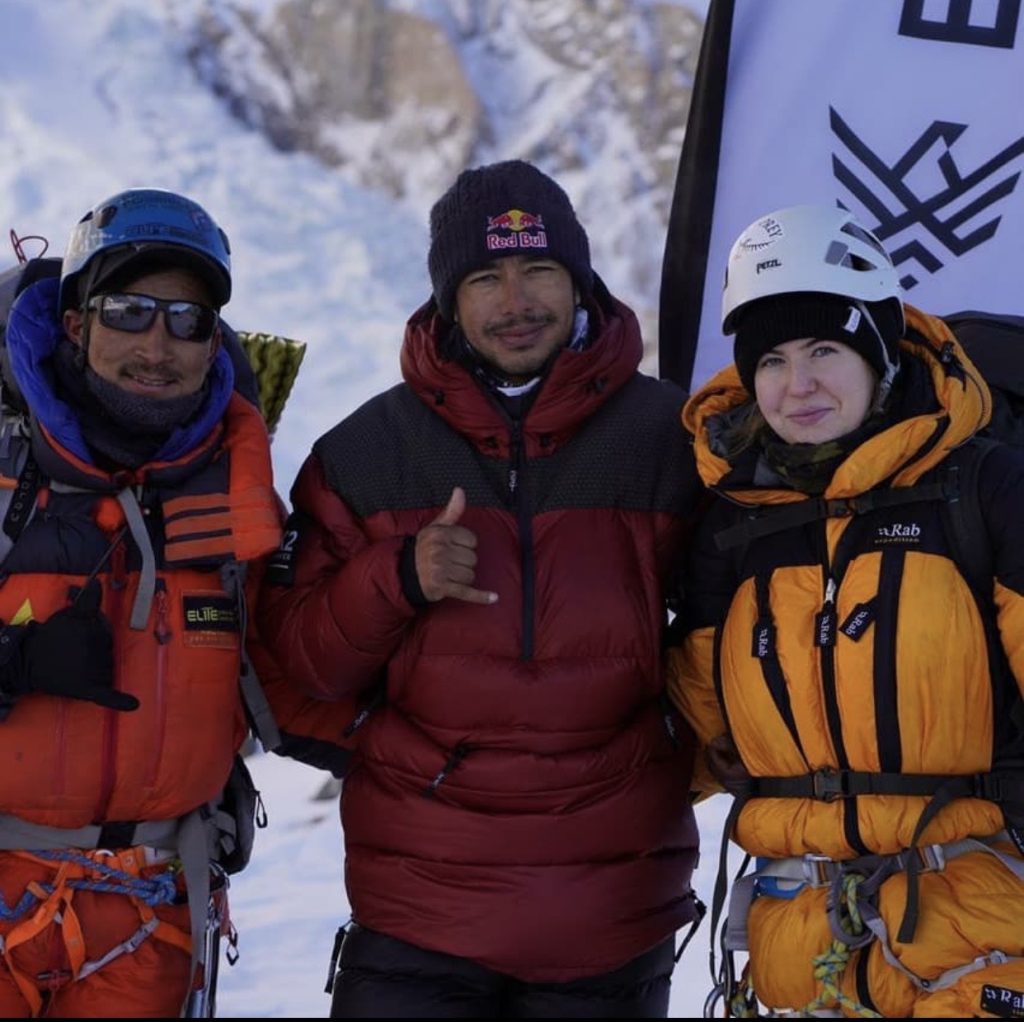
This guide is written by Adriana Brownlee, professional mountaineer and the youngest woman to summit all 14 of the world’s 8,000m peaks. AGA Adventures treks are co-led by Gelje Sherpa, who grew up in the Khumbu Valley.
Key takeaways
- Altitude: Everest Base Camp is 5,364m. The highest point is Kala Patthar, about 5,545m.
- Duration: 11 to 12 trekking days, or 15 to 16 days including Kathmandu.
- Difficulty: moderate. The challenge is altitude, not technical terrain.
- Best time: spring (March to May) and autumn (late September to November).
- Permits: Sagarmatha National Park and Khumbu Pasang Lhamu Rural Municipality.
- Guide: yes, you need a guide.
- AGA price: US$2,900 per person, departing 4-20 April and 12-28 October every year.

Everest Base Camp trek: quick facts
| Fact | Details |
|---|---|
| Base camp altitude | 5,364m |
| Highest point | Kala Patthar, about 5,545m |
| Total distance | About 130km return from Lukla |
| Duration | 12-16 days (AGA itinerary: 15 days, Kathmandu to Kathmandu) |
| Difficulty | Moderate, non-technical |
| Daily walking | 2-8 hours |
| Best seasons | Spring (March-May) and autumn (late September-November) |
| Start and finish | Lukla, reached by flight from Ramechhap or Kathmandu |
| Accommodation | Teahouses (family-run mountain lodges) |
| Permits | Sagarmatha National Park + Khumbu Pasang Lhamu Rural Municipality |
| Guide required | Yes |
| AGA price and dates | US$2,900 per person, 4-20 April and 12-28 October every year |
How long is the Everest Base Camp trek?
The Everest Base Camp trek takes 11 to 12 days on foot from Lukla and back, and 15 to 16 days in total including Kathmandu. That is about 130km of walking. Two acclimatisation days, in Namche Bazaar and Dingboche, are essential and should never be skipped.
This is the AGA Adventures itinerary, designed around a safe rate of altitude gain:
| Day | Route | Overnight altitude |
|---|---|---|
| 1 | Arrive in Kathmandu, meet Adriana and Gelje | 1,400m |
| 2 | Preparation day: gear check, shopping, welcome dinner | 1,400m |
| 3 | Fly Ramechhap to Lukla (2,860m), trek to Phakding | 2,610m |
| 4 | Phakding to Namche Bazaar | 3,440m |
| 5 | Acclimatisation day: hike to the Everest View Hotel (3,880m), massage | 3,440m |
| 6 | Namche to Debuche via Tengboche Monastery | 3,820m |
| 7 | Debuche to Dingboche | 4,410m |
| 8 | Acclimatisation day in Dingboche, short hike | 4,410m |
| 9 | Dingboche to Lobuche via the Everest Memorial | 4,940m |
| 10 | Lobuche to Gorak Shep and Everest Base Camp (5,364m) | 5,164m |
| 11 | Sunrise hike up Kala Patthar, trek to Pheriche | 4,240m |
| 12 | Pheriche to Namche Bazaar | 3,440m |
| 13 | Namche to Lukla | 2,860m |
| 14 | Fly to Ramechhap, drive to Kathmandu, celebration dinner | 1,400m |
| 15 | International flight home or contingency day | – |
Weather often delays Lukla flights, so always leave at least one spare day before your flight home.
How hard is the Everest Base Camp trek?
The Everest Base Camp trek is moderate: the trails are non-technical, but the altitude makes it harder than the same distance at home. The real challenge is the thin air above 4,000m, not the walking itself.
You are fit enough if you can walk 10km comfortably over hilly terrain with a small backpack. No previous trekking experience is needed. The most important things are a positive mindset and the patience to walk slowly.
How to train for the EBC trek:
- Hike 3 to 4 hours on hills at least once a week for 2 to 3 months before you go
- Train in the boots you will trek in
- Add stairs or step-ups for leg strength
- Practise using trekking poles
If you are nervous about your fitness, AGA runs a training weekend in the Lake District with professional mountain guides, covering walking technique, poles and efficient hiking.
When is the best time to trek to Everest Base Camp?
The best time to trek to Everest Base Camp is spring (March to May) or autumn (late September to November). These months bring the most stable weather, clear mountain views and the most reliable Lukla flights. AGA runs two EBC treks every year, 4-20 April and 12-28 October, timed for the best conditions in each season.
| Months | Season | Conditions |
|---|---|---|
| March-May | Spring (peak) | Warmer days, rhododendrons in bloom, Everest expedition teams at base camp, some afternoon cloud |
| June-early September | Monsoon | Rain at lower altitude, cloudy views, frequent flight delays, few trekkers |
| Late September-November | Autumn (peak) | Clearest skies, crisp air, best views, busiest trails |
| December-February | Winter | Very cold nights (below -15°C at Gorak Shep), quiet trails, some lodges closed |
For the clearest views, choose October. To see Everest expedition teams at base camp, choose April.
How much does the Everest Base Camp trek cost?
The AGA Adventures Everest Base Camp trek costs US$2,900 per person, covering everything from your Kathmandu airport pickup to your return. On top of that you pay for international flights, your Nepal visa, insurance and tips.
| Cost | Included with AGA? |
|---|---|
| Kathmandu airport transfers and internal transport | Yes |
| 3 nights in a top Kathmandu hotel | Yes |
| Welcome and farewell dinners | Yes |
| Return flights to Lukla | Yes |
| Permits and park fees | Yes |
| Teahouse accommodation on the trek | Yes |
| Meals and soft drinks on the trek | Yes |
| Porters (15kg per client) | Yes |
| Sherpa guides, plus guide insurance | Yes |
| Satellite phone, radios, emergency oxygen, medical kit, weather forecasts | Yes |
| 60 min deep tissue massage in Namche Bazaar | Yes |
| International flights to Kathmandu | No |
| Nepal visa on arrival | No |
| Travel and rescue insurance | No |
| Tips for guides and porters | No |
| Wifi, charging, hot showers, snacks and alcohol on the trek | No |
| Trekking gear and clothing | No |
| Kathmandu lunches and dinners, extra hotel nights | No |
Bring extra cash in Nepali rupees for wifi, charging and hot showers. Teahouses charge for these, and prices rise the higher you go.
What permits do you need for Everest Base Camp?
You need two permits for the Everest Base Camp trek: the Sagarmatha National Park entry permit and the Khumbu Pasang Lhamu Rural Municipality permit. A TIMS card is no longer required in the Everest region.
| Permit | Cost for foreigners (2026) | Where to get it |
|---|---|---|
| Sagarmatha National Park | NPR 3,000 + 13% VAT (about US$25) | Kathmandu or the park gate at Monjo |
| Khumbu Pasang Lhamu Rural Municipality | About NPR 2,000-3,000 | Lukla, shortly after landing |
Permit fees in Nepal are revised from time to time, so check the latest rates with the Department of National Parks and Wildlife Conservation or the Nepal Tourism Board before you travel. Both permits are included and arranged for you on AGA treks.
Do you need a guide for Everest Base Camp?
Yes, you need a guide to trek to Everest Base Camp. A good guide also makes the trek far safer, especially for spotting altitude sickness early. Every AGA trek is led by experienced Sherpa guides.
How do you get to Lukla?
You reach the start of the EBC trek by flying to Lukla (2,860m). In peak seasons most Lukla flights leave from Ramechhap, about a 4 to 5 hour drive from Kathmandu, rather than from Kathmandu airport. AGA arranges the transfer and flights for you.
Lukla flights are short and spectacular but depend on clear weather at both ends. Delays of a day or more are common, which is why the AGA itinerary includes a contingency day.

How do you avoid altitude sickness on the EBC trek?
The best way to avoid altitude sickness on the Everest Base Camp trek is to ascend slowly and take proper rest days. Most people feel some effects above 4,000m, usually from Dingboche onwards. Altitude sickness is the biggest risk on the trek.
Common symptoms: headache, nausea, loss of appetite, dizziness, poor sleep and unusual tiredness.
Warning signs to descend immediately: confusion, loss of balance, breathlessness at rest or a wet cough. These can signal HACE or HAPE, which are life-threatening.
How to reduce your risk:
- Never skip the acclimatisation days in Namche Bazaar and Dingboche
- Walk slowly, even when you feel strong
- Drink 3 to 4 litres of water a day
- Avoid alcohol above Namche
- Tell your guide about any symptoms straight away
- Speak to your GP about altitude medication such as Diamox before you travel
AGA guides carry a full medical kit, emergency oxygen, a satellite phone and radios, and they check on every client daily. For more tips, read our guide to altitude sickness do’s and don’ts.
What are the teahouses like on the Everest Base Camp trek?
On the EBC trek you sleep in teahouses every night: family-run mountain lodges with a warm communal dining room. AGA books the best lodge in each village, so most rooms have attached bathrooms and electric blankets, and single rooms are available on request. Lodges get simpler higher up, so bring a warm sleeping bag for the coldest nights.
- Food: dal bhat (rice, lentils and curry) is the trekker’s staple and comes with free refills. Menus also offer noodles, pasta, potatoes, eggs and soups.
- Water: buy boiled or filtered water, or treat your own. Avoid untreated tap water.
- Wifi and charging: available in most villages for a fee, getting slower and pricier with altitude.
- Showers: hot showers are available lower down for a fee, but rare above Dingboche.
- Cash: carry Nepali rupees. The last reliable ATMs are in Lukla and Namche Bazaar.
On AGA treks, all lodge meals and soft drinks are included.

What should you pack for Everest Base Camp?
Pack in layers for the Everest Base Camp trek, because temperatures range from warm days below Namche to well below freezing at night near base camp. Porters carry up to 15kg of your kit in a duffel bag, and you carry a 20L daypack.
| Category | Essentials |
|---|---|
| Footwear | Broken-in hiking boots or sturdy trail shoes, 4 pairs of trekking socks, lodge slippers or crocs |
| Layers | Merino base layers (top and bottom), 2 thin mid layers, thick fleece, warm down jacket |
| Outer layers | Softshell jacket with hood, waterproof jacket and trousers, hiking trousers, softshell trousers |
| Accessories | Warm hat, cap, buff, category 3 sunglasses, thin gloves, softshell gloves, insulated gloves |
| Kit | 20L backpack, trekking poles, sleeping bag, 1L Nalgene bottle, compression sacks |
| Personal | SPF 50 suncream, toiletries, travel towel, power bank and cables, snacks |
| Health | Personal first aid kit, painkillers, prescribed altitude medication (consult your GP) |
AGA provides a duffel bag in Kathmandu, and anything you forget can be bought there on the preparation day. For our full kit advice, see what to pack for a trek.
What insurance do you need for the Everest Base Camp trek?
You need travel insurance that covers trekking and helicopter rescue up to at least 6,000m. Without it, an emergency evacuation from the Khumbu can cost over US$100,000.
Check that your policy covers:
- Helicopter rescue and medical evacuation
- Medical treatment and hospitalisation
- Repatriation
- Trip cancellation and interruption
AGA partners with Global Rescue for medical and security evacuation, and recommends adding IMG Signature travel insurance for cancellation cover.
Why trek to Everest Base Camp with AGA Adventures?
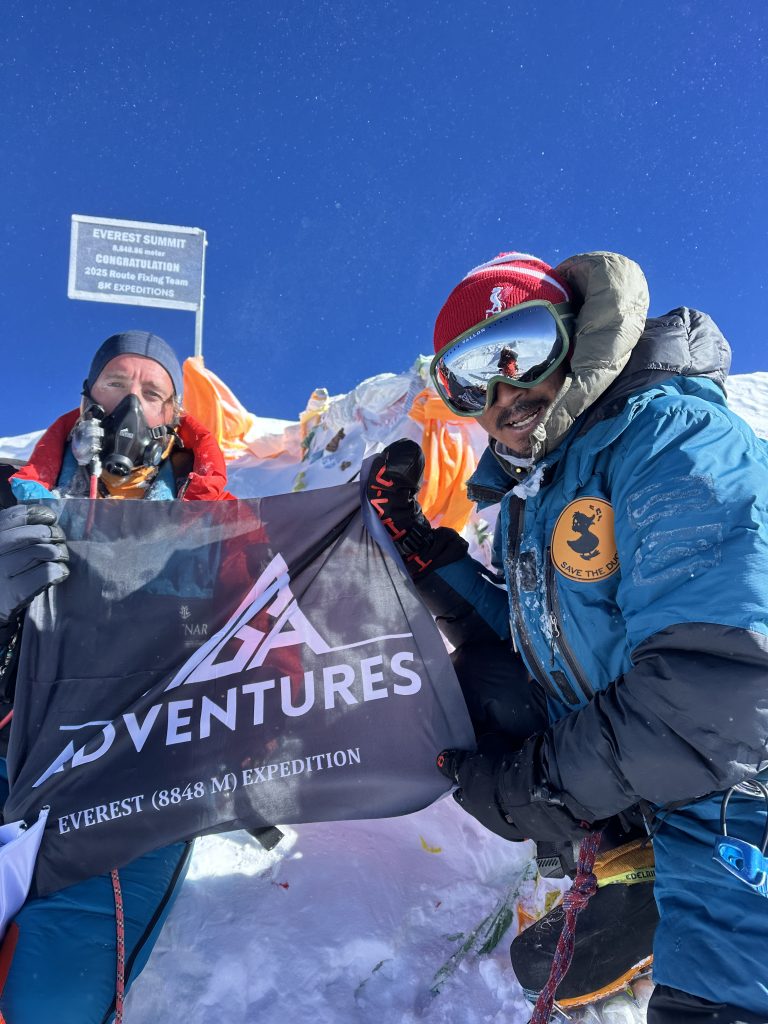
AGA Adventures treks are led by people who know the Himalayas better than almost anyone. Founder Adriana Brownlee is the youngest woman to climb all 14 of the world’s 8,000m peaks, and co-founder Gelje Sherpa grew up in the Khumbu Valley.
- We organise everything, from airport pickup and Lukla flights to permits, porters and meals, so all you have to focus on is trekking and staying fit and healthy.
- Local Sherpa guides who were born in the villages you walk through and share their stories along the way.
- A safe, unhurried itinerary with two acclimatisation days and a contingency day.
- Safety first, with a satellite phone, radios, emergency oxygen, a full medical kit and daily weather forecasts.
- Giving back: your included massage in Namche is with Lehara, a not-for-profit that trains and employs local Sherpa therapists and funds Khumbu community projects.
Everest Base Camp trek FAQs
Can beginners do the Everest Base Camp trek?
Yes. No trekking or climbing experience is needed. If you can walk 10km over hills with a small backpack, you have the base fitness to train for EBC.
How long does it take to walk to Everest Base Camp?
About 8 days up from Lukla and 3 days back down. A full trip from Kathmandu usually takes 15 to 16 days.
Can you see Everest from Everest Base Camp?
Not really, as nearby peaks hide the summit from base camp itself. The best view of Everest is from Kala Patthar (about 5,545m), which you climb the next morning.
Do I need a guide for the Everest Base Camp trek?
Yes, you need a guide for the EBC trek. A guide also makes it safer and easier, especially for managing altitude.
Is there wifi on the Everest Base Camp trek?
Yes, most teahouses offer paid wifi, but it gets slower and more expensive the higher you go.
What is the hardest part of the Everest Base Camp trek?
The final days between Lobuche, Gorak Shep and Kala Patthar, where you are above 4,900m and each breath holds roughly half the oxygen of sea level.
How cold does it get at Everest Base Camp?
In spring and autumn, days can feel mild in the sun, but nights at Gorak Shep often drop to between -10°C and -15°C.
How much does the Everest Base Camp trek cost with AGA?
US$2,900 per person, including flights to Lukla, permits, guides, porters, accommodation and meals on the trek.
What insurance do I need for Everest Base Camp?
Cover for trekking and helicopter rescue up to 6,000m, plus medical evacuation and repatriation.
Ready to trek to Everest Base Camp?
Join Adriana, Gelje and the AGA Sherpa team on the Everest Base Camp trek, departing 4-20 April and 12-28 October every year, for US$2,900. We organise everything, so all you need to do is trek.
Email info@agaadventuresltd.com or book a call to save your place.
Women trekkers, read my Everest Base Camp trek guide for women for my tips on toilets, periods, showers and what to wear.