By Adriana Brownlee, co-founder of AGA Adventures and the youngest woman to summit all 14 of the world’s 8,000m peaks. Last updated October 2026.
At a glance: how AGA keeps you safe
- Written risk assessments for every trip, updated as conditions change on the mountain
- Medical history, emergency contacts and the correct insurance for every client
- A training plan for every client when they sign up
- Satellite phone, Garmin inReach and radios, with constant contact with our team in Kathmandu
- Daily health checks, with pulse oximeter and blood pressure checks when needed
- Two professional weather forecasters and ongoing avalanche risk assessment
- Clear experience requirements, including a 6,000m summit before any 8,000m peak
- Leaders who will always turn around if it is not safe
Why safety comes first
At AGA Adventures, everything we do is built on three pillars: safety, high performance and family. Safety comes first, and the reason is simple. Your life is always more important than the mountain. And it is not only your life: the lives of our Sherpa team matter just as much, and every decision we make on the mountain protects them too.
That is why we never take unnecessary risks. Sometimes it means turning around on an expedition, even when the summit feels close. We would always rather bring everyone home safely and come back another day.
We are also seeing the climbing industry become more and more commercialised. Many companies now prioritise the number of clients over their experience, putting people on big mountains before they are ready. We do the opposite. For us, experience is key, and we only take climbers onto a mountain once they have built the skills and background to climb it safely:
- 6,000m peaks: you need a good level of training and some mountains already behind you
- 8,000m peaks: you must have summited at least one 6,000m peak first
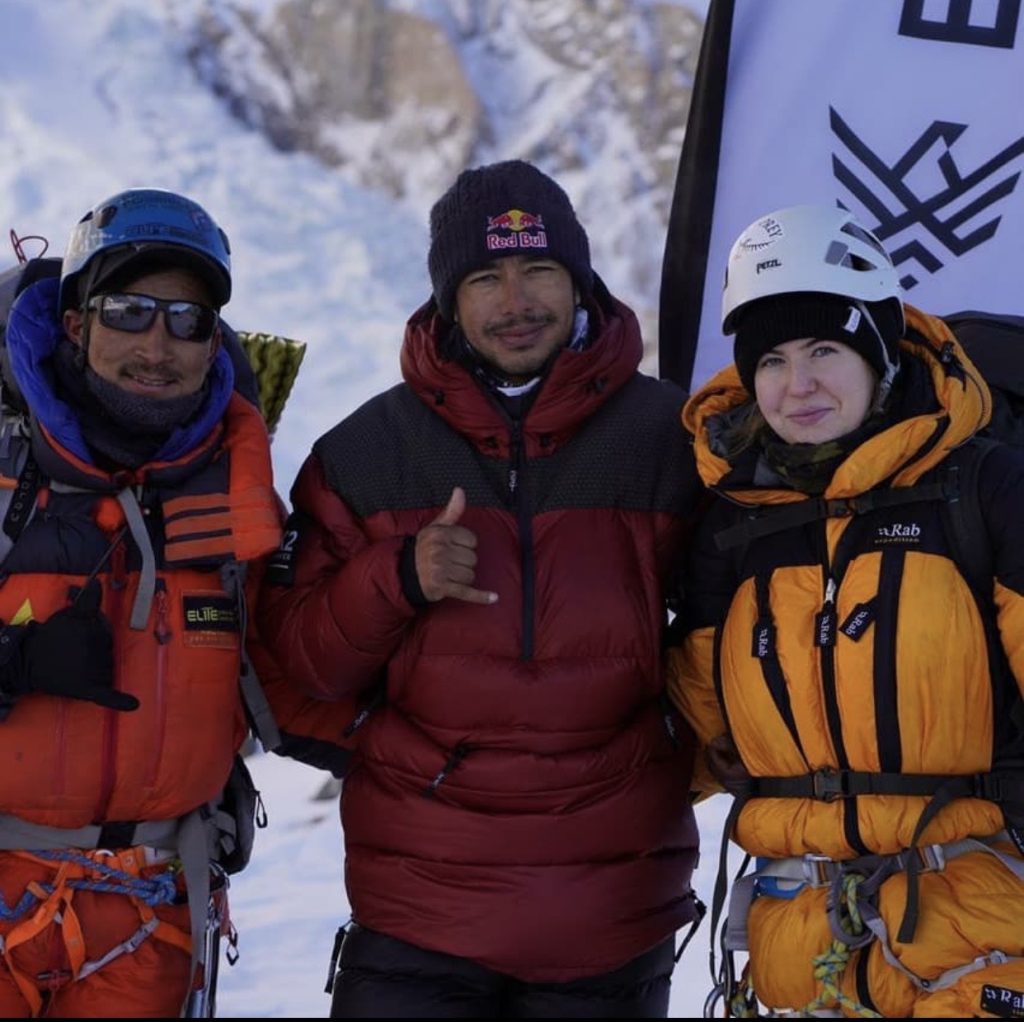
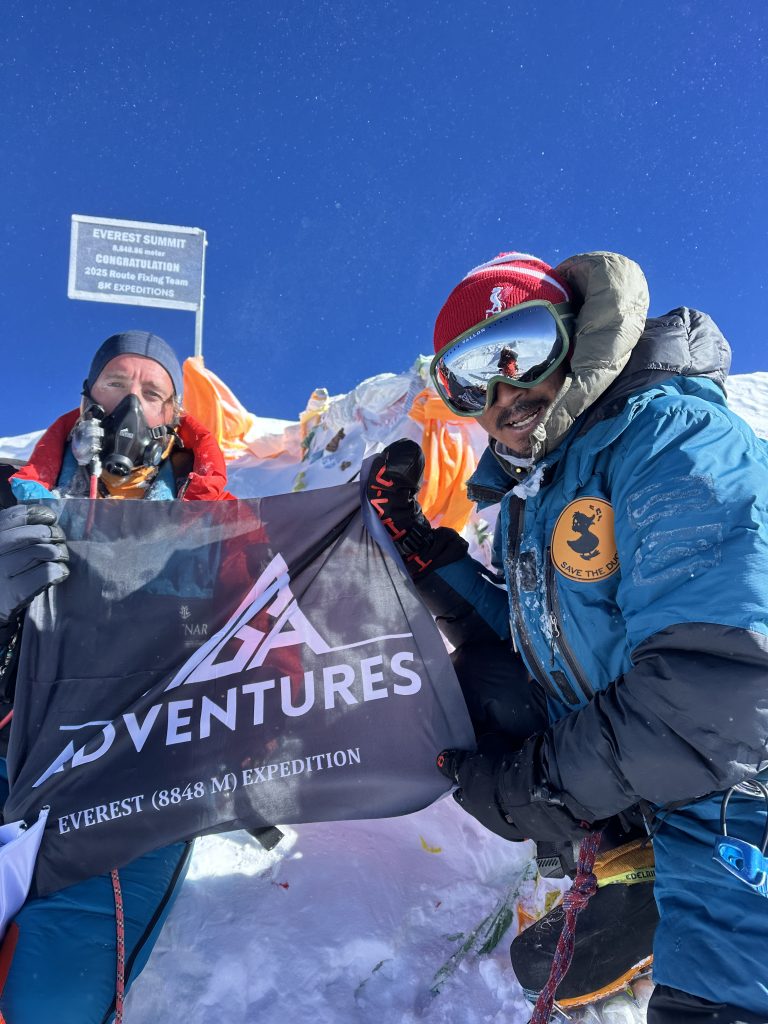
AGA was founded by Adriana Brownlee, the youngest woman to summit all 14 of the world’s 8,000m peaks, and Gelje Sherpa, who has also summited all 14. We have spent years on the world’s highest mountains and seen first-hand what happens when preparation is rushed or warning signs are ignored. That experience is why we hold ourselves to very high safety standards on every expedition and trek.
This post explains exactly how we manage risk, so you know what to expect when you travel with us.

Risk assessments before and during every trip
Every AGA trip starts with a written risk assessment. Before we leave Kathmandu, we work through the specific hazards of that route and season: altitude, terrain, river crossings, rockfall, avalanche-prone slopes, weather patterns, evacuation options and the nearest medical facilities. For each risk, we set out how we will reduce it and what we will do if something goes wrong.
A risk assessment is only useful if it reflects what is happening on the ground, so we do not leave it in a folder. We review and update it throughout the trip as conditions change: after fresh snowfall, when the weather forecast shifts, or if someone in the group is unwell. Our leaders make daily decisions based on the latest picture, not on a plan written weeks earlier.
Before you travel
Safety starts long before you arrive in Nepal. Every client completes our client forms before the trip, including:
- Medical history, so our leaders know about any conditions, medication or previous altitude illness before you set off
- Emergency contacts, so we can reach the right people quickly if we ever need to
We also require every client to have the correct insurance, covering helicopter rescue, medical evacuation and treatment up to the maximum altitude of their trip. Without it, a rescue in the Himalaya can cost over US$100,000. We partner with Global Rescue and recommend their membership to all our clients, and we check that every client’s cover is right for their trip before they travel.
Every client also receives a training plan when they sign up, tailored to their trip. It sets out the level of fitness that trip needs and how to build up to it, so you know exactly what to expect and arrive ready. For expeditions, we also expect climbers to work on core mountain skills before they arrive.
Constant communication
In the mountains, good communication can be the difference between a minor problem and a serious one. On every AGA trip we carry:
- A satellite phone, for calls from anywhere, including places with no mobile signal
- A Garmin inReach, for satellite messaging, GPS tracking and an SOS function
- Radios, so our guides and Sherpas can stay in touch with each other across the group and between camps
We also keep constant communication with our team in Kathmandu. They follow every trip, receive regular updates from the mountain, and can arrange helicopters, medical support or logistics immediately if needed. You are never out on your own.

Daily health checks
Altitude affects everyone differently, and the earlier a problem is spotted, the easier it is to manage. That is why we check on every client, every day.
Most of this happens through simple, honest conversation. Each day our leaders ask how you slept, whether you are eating and drinking well, and whether you have any headache, nausea or unusual tiredness. These are the early signs of acute mountain sickness, and talking openly about them is one of the most effective safety tools we have.
Because our team has so much experience at altitude, we can usually tell quite quickly the difference between normal fatigue after a long day and the early signs of altitude sickness. We watch for this closely, because spotting it early is what keeps a small problem from becoming a serious one.
When we feel it is necessary, we also use medical equipment to check further, including a pulse oximeter to measure blood oxygen levels and a blood pressure monitor with stethoscope. If anything concerns us, we act early: an extra rest day, a slower pace, descending to a lower altitude, or arranging evacuation if needed. Every trip also carries a comprehensive medical kit.
How we monitor also depends on the trip:
- Everest expedition: we carry out frequent medical checks throughout the expedition, and there is a doctor at Everest Base Camp with the Himalayan Rescue Association (HRA), who can do check-ups for a fee.
- Manaslu expedition: as on Everest, we run frequent medical checks of our own and have access to doctors at Base Camp.
- Everest Base Camp and other Khumbu treks: as well as our own checks, there are health clinics along the trail where you can get a check-up with a doctor.
- Kilimanjaro: the route gains altitude much faster than our Himalayan itineraries, and clients take Diamox, so we check everyone’s blood oxygen with the pulse oximeter every day.
- Aconcagua: the park runs mandatory health checks that every climber must pass before moving higher up the mountain, alongside our own daily monitoring.
Weather forecasting and avalanche risk
On a big mountain, the weather decides almost everything, especially the timing of a summit push. Rather than relying on a single source, we use two professional mountain weather forecasters, Marc De Keyser and Michael Fagin. Comparing two independent forecasts gives us a clearer picture of wind, snowfall and summit windows, and helps us spot when the forecast is uncertain.
We also assess avalanche risk continuously, using established assessment techniques. That means looking at recent snowfall, wind loading, temperature changes, slope angle and the time of day, as well as observing the snowpack and any signs of instability. If a slope or route is not safe, we wait, take another route, or turn around. No summit is worth an unnecessary risk.

Our team and decisions on the mountain
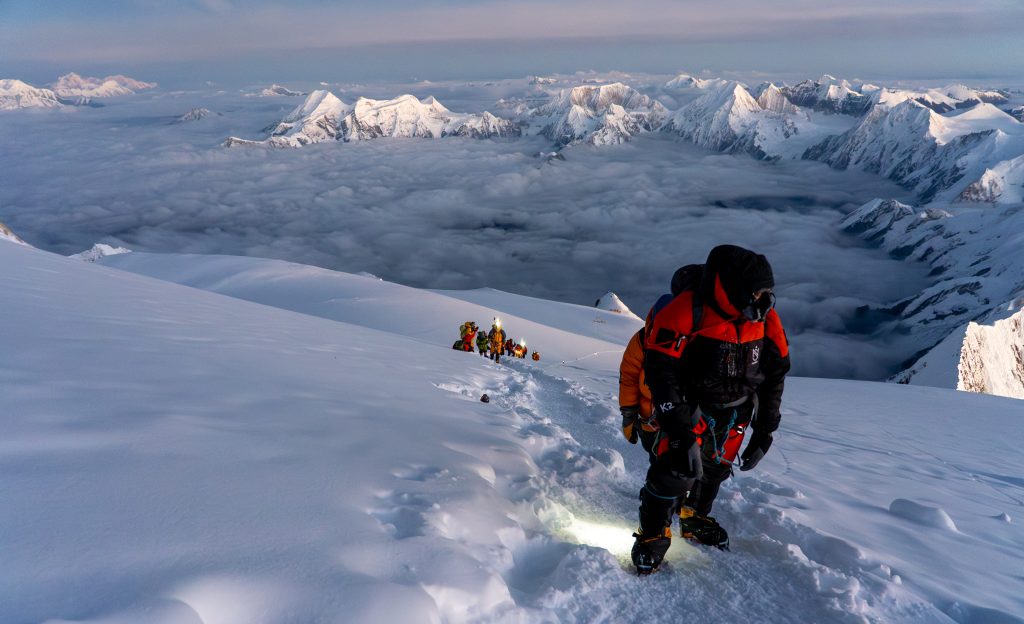
The people around you matter as much as the equipment. Our Sherpa team is experienced, English-speaking and hand-picked, and the Sherpas on our expeditions have 8,000m experience. On expeditions such as Everest, Manaslu and Ama Dablam, every climber has a dedicated 1:1 Sherpa guide.
We keep our groups small, so our leaders know every client personally and can notice when something is not right. And we are clear with every client from the start: our leaders have the final say on safety decisions, including the decision to turn back. We would always rather bring you home safely and try again than take a risk we are not comfortable with.
Safety is at the heart of AGA Adventures because we care about the people who climb and trek with us. If you have any questions about how we keep you safe on a specific trip, get in touch at info@agaadventuresltd.com and we will talk you through it.
Explore our trips: Everest Expedition · Manaslu Expedition · Ama Dablam · Island Peak · Everest Base Camp Trek · Kilimanjaro · Aconcagua
Read next: Training for Mount Everest: the complete path from beginner to 8,848m
Frequently asked questions
Is it safe to climb or trek with AGA Adventures? No mountain trip is completely without risk, but we manage risk carefully at every stage: written risk assessments updated during the trip, satellite communication, daily health checks, two independent weather forecasts and experienced Sherpa teams. Our leaders always put safety ahead of reaching the summit.
What communication equipment do you carry? Every trip carries a satellite phone, a Garmin inReach and radios, and our team stays in constant contact with our office in Kathmandu.
How do you check for altitude sickness? We talk to every client every day about how they feel, and when needed we use a pulse oximeter and a blood pressure monitor. We follow acclimatisation itineraries and act early if anyone shows symptoms.
What insurance do I need? You need insurance that covers helicopter rescue, medical evacuation and treatment up to the maximum altitude of your trip. We partner with Global Rescue and check every client’s cover before they travel.
Who decides whether we go for the summit? Our leaders make the final call, based on the weather forecasts, avalanche conditions and the health of the group. If it is not safe, we wait or turn back.
What experience do I need to join an AGA expedition? For 6,000m peaks you need a good level of training and some previous mountain experience. For 8,000m peaks you must have summited at least one 6,000m peak. We would rather help you build up step by step than put you on a mountain before you are ready.
Will you help me prepare? Yes. Every client receives a training plan when they sign up, matched to their trip, so you know the fitness level needed and how to reach it before you travel.